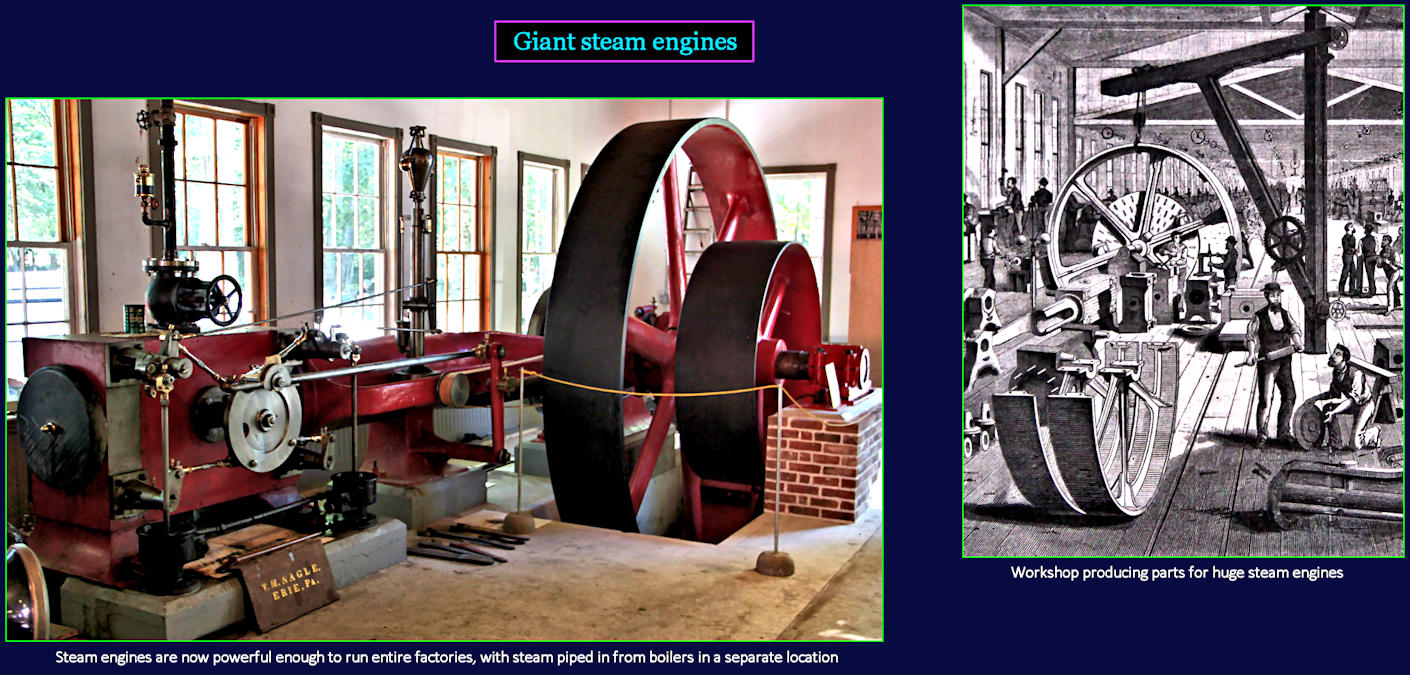
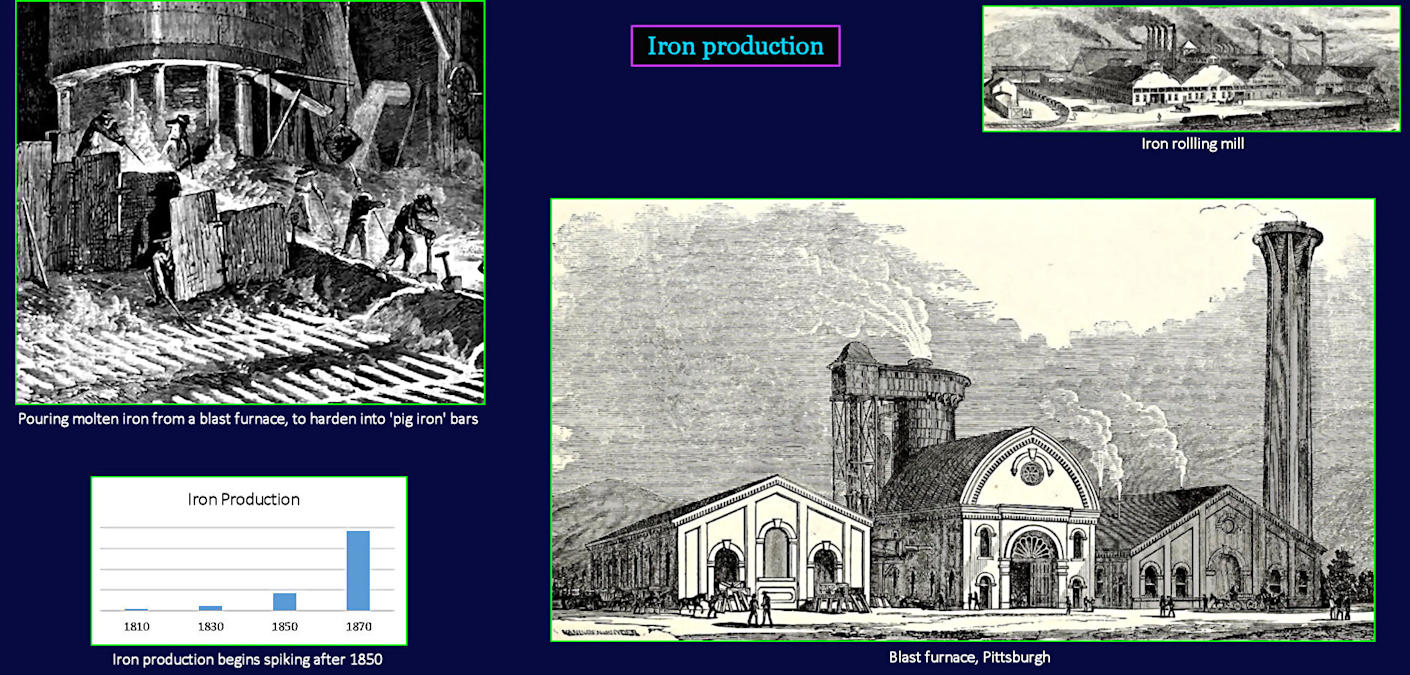
Stronger than IronSteel is mostly iron, but with far superior strength. It is technically an alloy of iron, but in 1890 the only real difference is the amount of carbon in the iron. For steel, the precise amount of carbon is critical. Prior to 1870, there is no way this can be achieved easily. Steel is available, but only in small quantities. Even wrought iron, the most commonly used form of iron, is time-consuming and costly to produce. The key that unlocks this puzzle is first developed in Britain in the 1860s. Within ten years, enterprising Americans like Andrew Carnegie are keen to give it a try. Pittsburgh is the red-hot center of this experiment. |
| ||||||||||||||||
| |||||||||
Global Competition The Industrial Era quickly turns into a world-wide contest involving all the major nations in Europe, and now the US. The bigger countries are favored, especially those with an abundance of the key ingredients. Iron and coal. Within 25 years, Britain, France and Germany will be involved in a catastrophic global war, largely driven by new steel weaponry. The charts above show the situation in 1890, when the US suddenly becomes a major player in steel. This is made possible by the growing quantity of steel coming out of Pittsburgh, which in turn is enabled by the increased flow of ore from Michigan, and coal from Pennsylvania. | |||||||||
| |||||||||
Furnaces and Mills America's dominant steel center is Pittsburgh, with easy access to both iron and coal. There are about a dozen blast furnaces by 1890 (YELLOW circles). These support 30 rolling mills (ORANGE circles), which might each contain up to 30 small furnaces used to remove carbon from iron, before it can be rolled. Bessemer converters remove the carbon much more cheaply, and in much larger batches. The first Bessemer converters in America are built in New York, Illinois, Ohio and Pennsylvania, before Andrew Carnegie brings the process to Pittsburgh in 1885. | |||||||||
| |||||||||
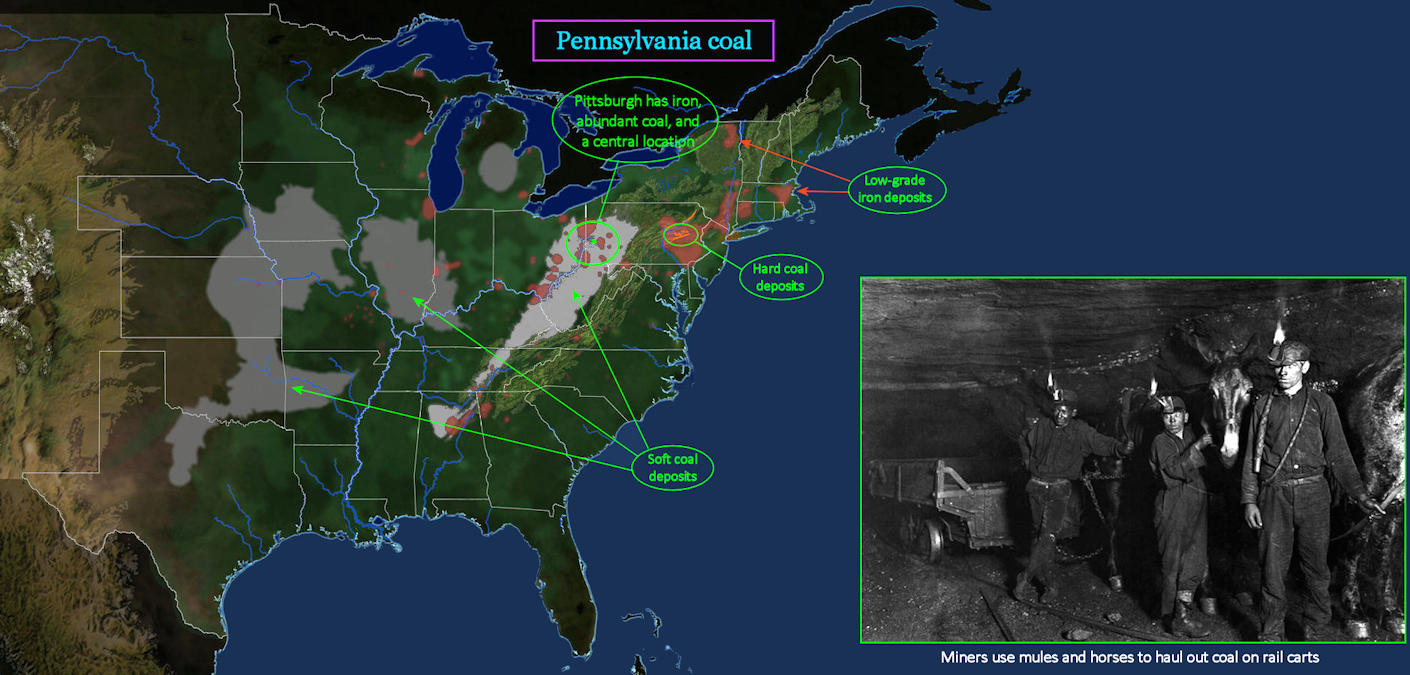
One-Man Empire When Andrew Carnegie transfers his focus from railroads and bridges to steel, the connection is obvious. Both railroads and bridges need steel, in large quantities. He starts by buying up existing iron and steel mills, beginning with Homestead Steel, just outside Pittsburgh. He adds a huge new Bessemer converter, and is on his way to building an empire. In the view at right, the blast furnaces producing the iron are visible in the far distance, near the top of the image. Other buildings house rolling mills, producing steel rails for railroads. Carnegie believes in going big, and by 1890 is the world's leading producer of iron and steel rails. America's first major union strike occurs at his Homestead plant, lasting four months before collapsing. | |||||||||
| |||||||||
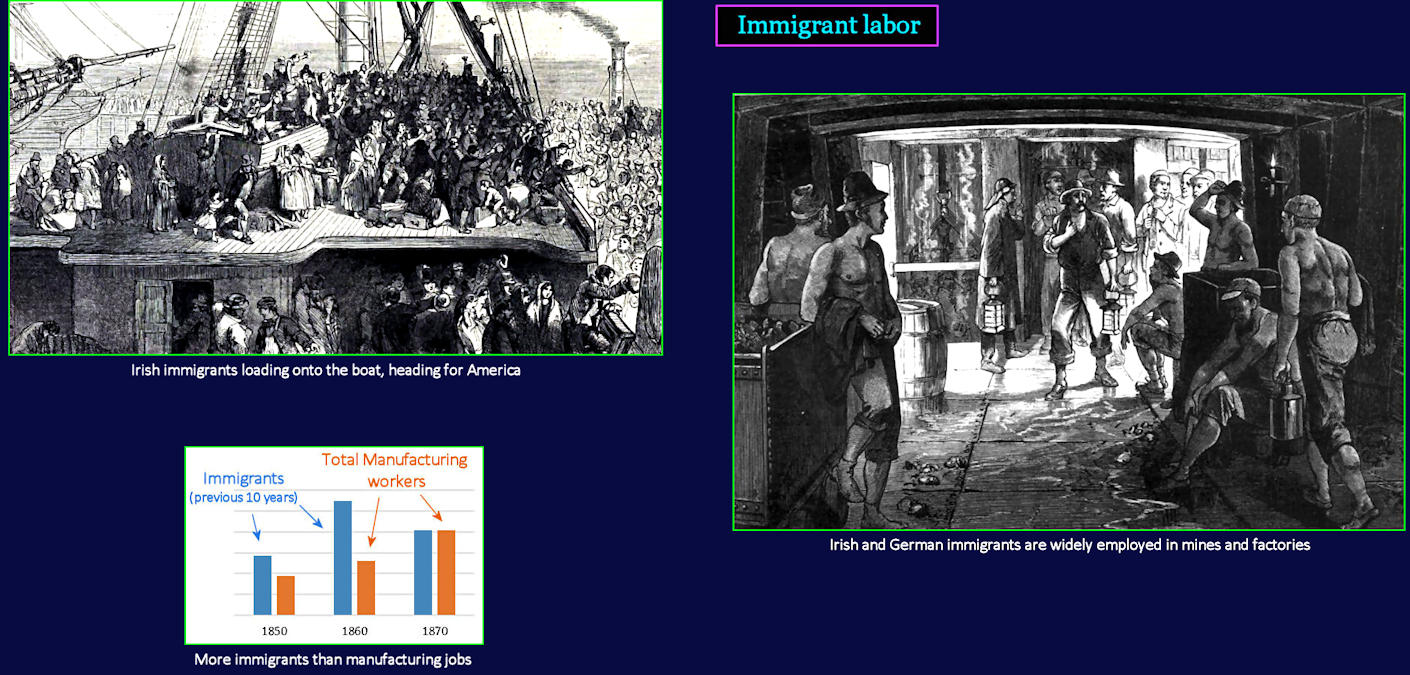
Steel Takes Over The first important use for steel is in bridges. In earlier times, bridges were usually supported by a structure of wooden beams, but only where posts can be driven in to support it (top left). Before the arrival of steel, the longest wrought iron bridge span is 320 feet (center top). The bridge across the Ohio River uses iron cables to support an iron girder span (top right). When a bridge is needed to cross the Mississippi River at St Louis, calculations indicate that wrought iron simply isn't strong enough to support the 520-foot span required (bottom). The Bridge takes seven years to finish, and consumes most of the steel available in the entire country at the time, before the arrival of the Bessemer process. | |||||||||
| |||||||||
Structural Skeleton Steel plays a vital role in making structures of all kinds taller and stronger. Steel girders, riveted together, provide a rigid cage-like structure supporting a thin masonry facade, with large window openings. Steel companies publish catalogs filled with listings for different sized girders, columns and truss connectors, together with data used to calculate safe designs (center right). When equipped with elevators suspended on steel cable, 12-story buildings are now possible. The Otis Safety Elevator demonstration in London, before the Civil War (top center), creates a sensation when the special brake keeps the platform from free-falling, after the cable is disengaged | |||||||||